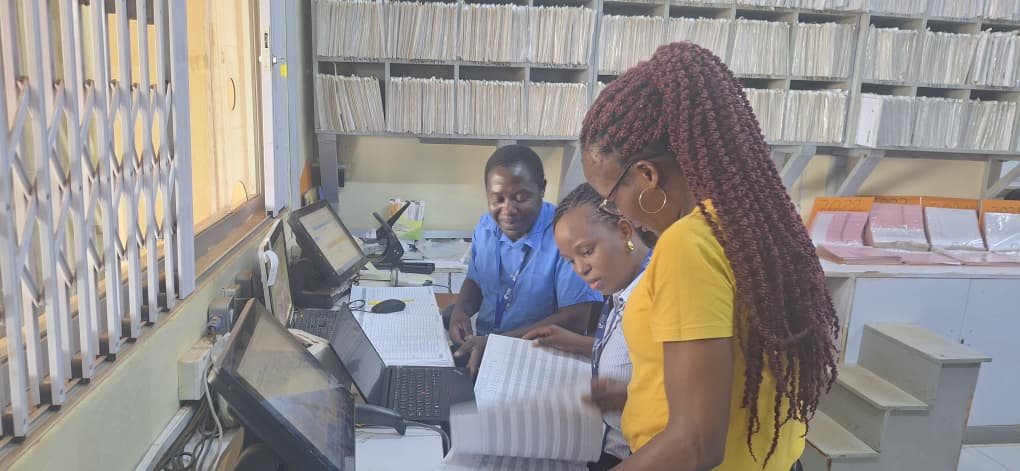
 At Partners In Hope (PIH) Malawi, we believe that strong data systems are essential for improving patient care and advancing health outcomes. Our work focuses on strengthening electronic and paper-based health information systems, building capacity among health workers, and promoting the use of data for continuous improvement in health care service delivery.
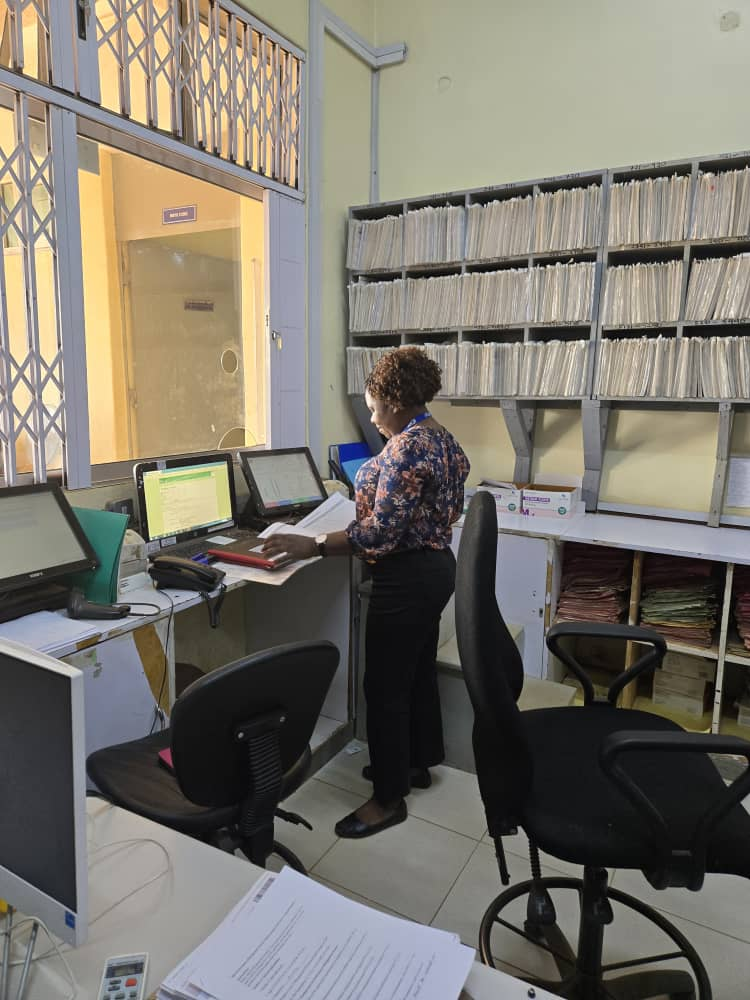
PIH supports use Electronic Medical Records (EMR) systems across health facilities. Working closely with national and district-level health information system partners, we help ensure that EMR platforms are functional, secure, and aligned with national priorities.
Through targeted mentorship and training, PIH builds the skills of both MoH and PIH staff in EMR use, data cleaning, and quality assurance. This includes ensuring real-time data entry, protecting patient confidentiality, and strengthening system sustainability. Regular reviews and feedback from end users help guide continuous system improvement so that health facilities can generate accurate, high-quality reports for program management and decision-making.
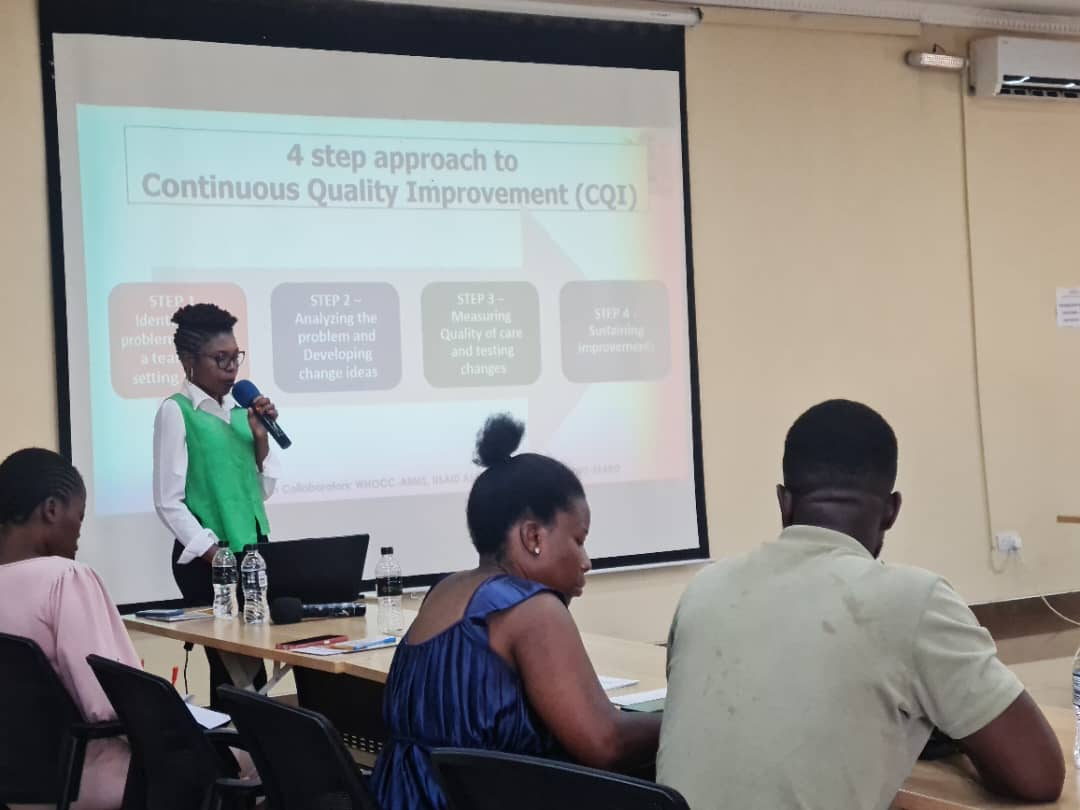
PIH supports the institutionalization of Quality Management (QM) and Quality Improvement (QI) practices within Health structures to strengthen service delivery and accountability. Facility-based teams lead QI projects that address key health priorities such as case finding effort, patient retention in care, TB preventive therapy completion, and viral load suppression.
Our approach emphasizes mentorship, collaboration, and government ownership. QI activities are implemented by MoH-led teams, while PIH provides technical guidance and capacity building. Facilities use simple, transparent tools, such as QI journals, dashboards, and visual scorecards, to track progress and promote learning. Regular district learning sessions create opportunities for sharing experiences and scaling up successful interventions.
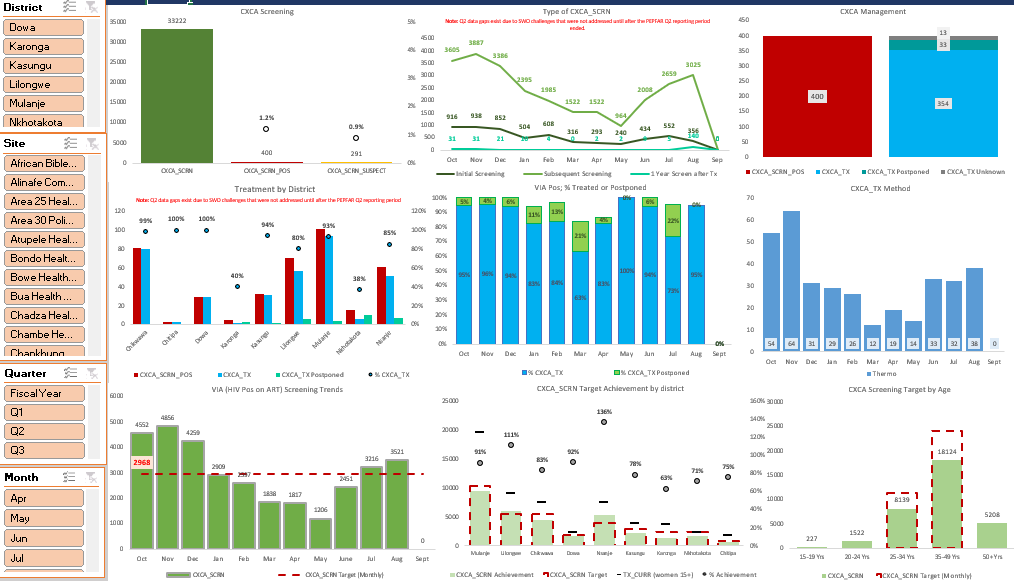
PIH is modernizing its data systems to improve accessibility and efficiency. We are transitioning to dynamic, automated, interactive dashboards that integrate data from the national EMR, DHIS2, and other Ministry of Health systems.
These visual tools allow PIH Medical Centre, district and facility teams to analyze trends, monitor performance, and make timely, evidence-based decisions. Automated data pipelines reduce manual data entry, minimize errors, and improve the speed of reporting. Through the Malawi Health Analytics Platform (MHAP), PIH works to make dashboards available to both central and district teams for greater transparency and collaboration.
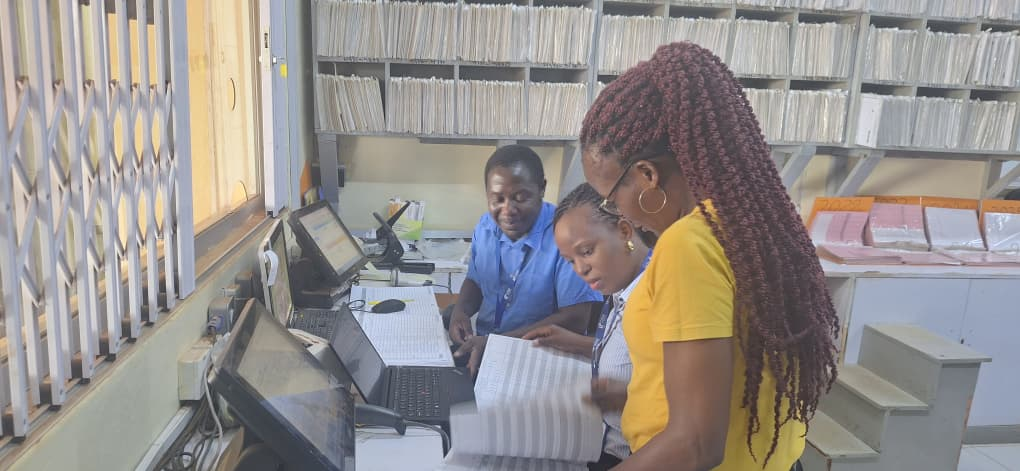
High-quality data underpins every aspect of effective health care delivery. PIH routinely conducts Data Quality Assessments (DQAs) and Data Deep Dives in collaboration with key stakeholders to ensure data from electronic and paper-based systems is accurate, complete, and reliable.
These assessments identify strengths, gaps, and opportunities for improvement. Deep-dive analysis help uncover root causes of persistent data issues. Findings are used to develop practical action plans and build local capacity for sustainable data management.

By transferring skills, tools, and leadership to Health care front line staff, we are helping to build a data ecosystem that will continue to drive quality improvement and strong health outcomes long after donor transitions.